Minimalist Abstraction: Erwin Blumenfeld’s January 1950 Vogue Cover
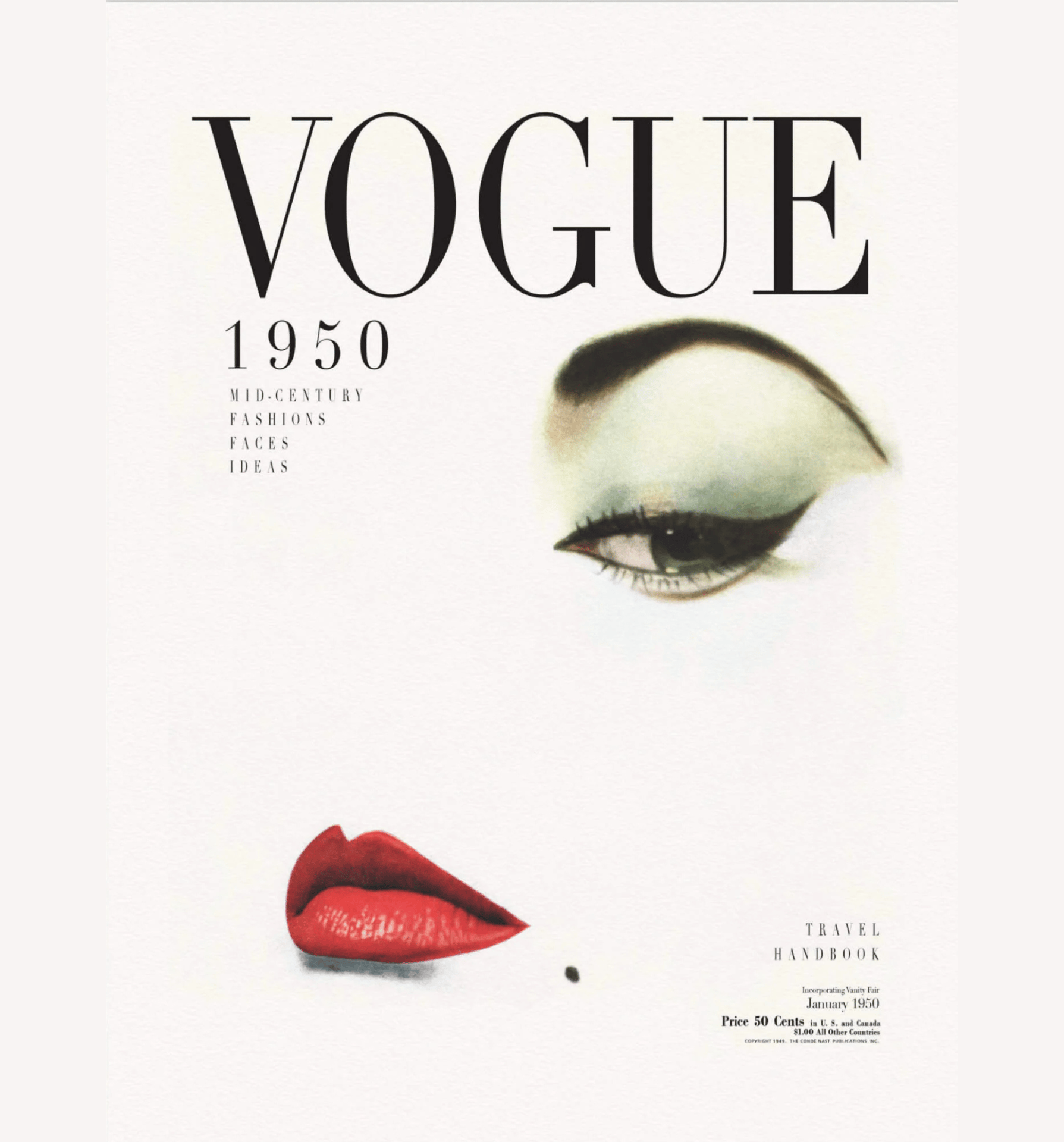
Vogue, January 1, 1950. Photography by Erwin Blumenfeld.

Bodoni Moda
CREATOR: Indra Kupferschmid
AaBbCcDdEeFf 123
Glacial Indifference
CREATOR: Alfredo Marco Pradil
AaBbCcDdEeFf 123
Josefin Sans Light Italic
CREATOR: Santiago Orozco
AaBbCcDdEeFf 123
At the dawn of a new decade, photographer Erwin Blumenfeld delivered one of the most audacious magazine covers in publishing history. Rather than presenting a conventional fashion portrait, Blumenfeld stripped the human face down to its absolute visual essentials: a striking crimson lip, a single dramatically defined eye, and a beauty mark set against a high-contrast, stark white background. By eliminating medium tones and facial contours, the composition blurred the line between commercial editorial work and modern graphic art, ushering in the 1950s with unprecedented visual boldness.
The genius of the cover lies in its masterful interplay between typography and negative space. The classic Vogue logotype floats effortlessly at the top, perfectly balanced by the sharp visual weight of the eye and lips. Blumenfeld's extreme crop and radical reductionism demonstrated that less could indeed be far more—transforming model Jean Patchett’s features into an iconic geometric symbol that commanded the newsstands.
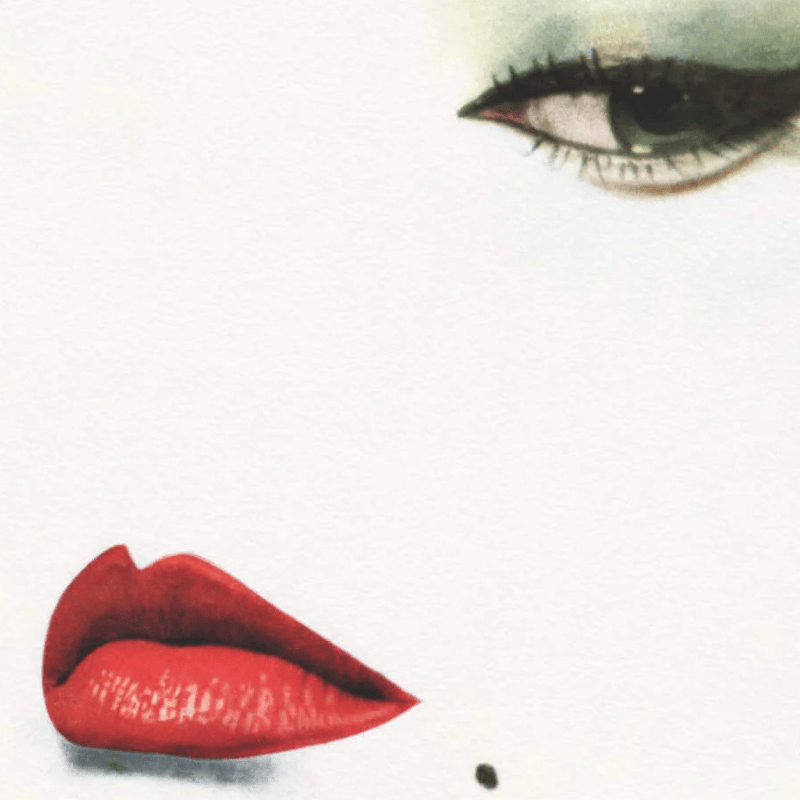
When analyzed through a design lens, Blumenfeld’s clever manipulation of high-contrast Kodachrome film and darkroom solarization comes alive. By isolating three primary focal points against pure white space, he transformed standard studio photography into a timeless graphic poster. This reductionist philosophy permanently altered mid-century art direction, proving that compelling typography and strategic restraint could communicate elegance far more effectively than cluttered realism.

I am interested in taking pictures that do not look like pictures, but like graphic art.

Erwin Blumenfeld
26 January 1897 – 4 July 1969•American photographer of German origin